The ECOVACS WINBOT W3 Omni Robot Window Cleaner review centers on a specific convenience: an included station that washes the robot’s wiping pads after use.
Its navigation modes, edge-focused scrubber and triple-nozzle spray also make it worth considering for people maintaining large glass panels and windows.
WINBOT W3 Omni Review Summary
The quick verdict
500+ ratings
Read Amazon ReviewsECOVACS WINBOT W3 Omni
A fit for homes with large glass areas and routine window-cleaning needs, especially buyers who want the robot to wash its pads after a run.
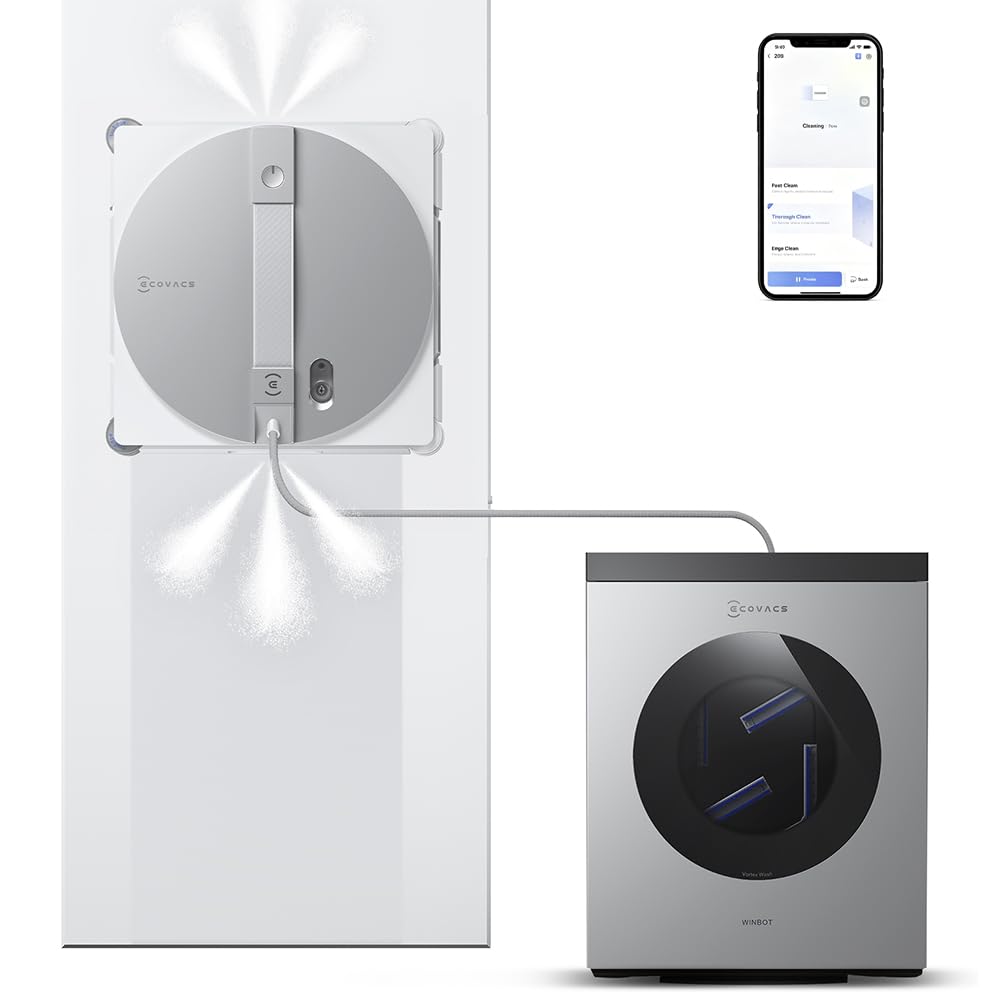
- Automatic station washing: the multifunctional station washes the robot’s wiping pads after use, using 16 high-pressure nozzles in a cycle described as taking about one minute.
- WIN-SLAM 5.0 navigation: the robot is described with dynamic obstacle avoidance and Fast, Intensive and Zone cleaning modes.
- TruEdge scrubber: the scrubber lowers along edges, cleans toward corners at 200 RPM and retracts automatically during operation.
- Triple-nozzle spray: three wide-angle nozzles apply water to help loosen dirt while the wet pad wipes the glass.

Pros
- The station takes pad washing off the user’s immediate post-cleaning routine.
- Three cleaning modes let buyers choose between a faster pass, a more intensive routine or a targeted zone.
Consider before buying
- For heavy dust buildup, the pad may reach capacity; the product guidance suggests rinsing it or running additional cycles.
- Buyers with unusually shaped or divided glass should check whether their window layout is compatible with the robot’s route and zone-cleaning approach.
Read the full review summary
The WINBOT W3 Omni is designed to take some of the repetitive work out of window care.
The robot uses WIN-SLAM 5.0 navigation and offers Fast, Intensive and Zone cleaning modes, while its station uses 16 high-pressure nozzles to wash the wiping pads in about one minute.
That combination is most relevant when you clean several windows routinely and want pad care included in the process.
Its cleaning approach combines a wet wiping pad with three spray nozzles and a scrubber designed to reach edges and corners.
The supplied details give a 130-minute battery life and a 1.1-liter capacity, but do not explain how those figures translate to window area or station refills.
Buyers should match the robot’s size and routine-maintenance design to their glass, and check that the included cleaning solution and pad arrangement suit their planned use.
The buying factors
WINBOT W3 Omni Scorecard
Editorial scores reflect listed features and buyer fit; they are not laboratory measurements or customer ratings.
Pad-washing convenience
The station automatically washes the wiping pads after use, with a one-minute wash cycle described.
Cleaning-mode flexibility
Fast, Intensive and Zone modes offer options for different window layouts and cleaning priorities.
Edge and corner attention
The TruEdge scrubber is designed to lower along edges, work into corners and retract automatically.
Spray coverage design
Three wide-angle nozzles work with a wet pad to distribute spray across glass panels.
Routine-cleaning fit
The product is positioned for dust, fingerprints and light dirt, with repeat cycles or a pad rinse suggested for heavier buildup.
Setup and care clarity
Automatic pad washing is a clear convenience, though buyers should confirm station placement, cleaning-solution use and the care routine for their windows.
Key Features and Specifications of WINBOT W3 Omni
- Automatic station washing: the multifunctional station washes the robot’s wiping pads after use, using 16 high-pressure nozzles in a cycle described as taking about one minute.
- WIN-SLAM 5.0 navigation: the robot is described with dynamic obstacle avoidance and Fast, Intensive and Zone cleaning modes.
- TruEdge scrubber: the scrubber lowers along edges, cleans toward corners at 200 RPM and retracts automatically during operation.
- Triple-nozzle spray: three wide-angle nozzles apply water to help loosen dirt while the wet pad wipes the glass.
- Battery and capacity: the product details list a 130-minute battery life and 1.1-liter capacity.
- Included items: the package details list a cleaning pad and cleaning solution with the WINBOT W3 Omni.
Pros and Cons of WINBOT W3 Omni
Pros
- The station takes pad washing off the user’s immediate post-cleaning routine.
- Three cleaning modes let buyers choose between a faster pass, a more intensive routine or a targeted zone.
- A dedicated moving scrubber is designed to reach window edges and corners.
- The triple-nozzle spray and wet pad combine loosening and wiping steps in the same cleaning approach.
Consider before buying
- For heavy dust buildup, the pad may reach capacity; the product guidance suggests rinsing it or running additional cycles.
- Buyers with unusually shaped or divided glass should check whether their window layout is compatible with the robot’s route and zone-cleaning approach.
- The 1.1-liter capacity is supplied without a clear explanation of refill intervals or how much glass it covers.
Who Should Buy WINBOT W3 Omni?
Good fit
Consider the WINBOT W3 Omni if you have multiple large windows, glass doors or floor-to-ceiling panels and want a robot to handle routine wiping.
The automatic pad-washing station is its clearest practical draw: it addresses the dirty-pad chore that can make a robot window cleaner less convenient after the cleaning run.
Its mode selection is useful if your routine includes both ordinary upkeep and occasional targeted work.
Fast, Intensive and Zone modes give you choices, while the edge-focused scrubber and triple-nozzle spray are intended to cover areas that matter on broad panes.
For everyday dust, fingerprints and light dirt, this design is aligned with recurring maintenance.
Before buying, map out where the station can sit and which panes you intend to clean. Consider how often your glass gets heavier buildup, since the pad may need rinsing or more than one cycle in that situation.
Also confirm the included pad and cleaning solution match the care routine you prefer.
Who should skip it
Skip this model if you mainly need a tool for occasional spot cleaning on a small number of easily reached panes; the automatic station and robot routines may add more setup than that job requires.
It may be a poor fit if your windows commonly have substantial dirt buildup and you expect one unattended cycle to handle it. The product guidance allows for pad rinsing or multiple cycles when the pad reaches capacity.
How the WINBOT W3 Omni Fits a Window-Cleaning Routine
The station changes the maintenance equation
A robot can reduce repeated wiping, but its pad still collects the material it removes. Here, the station’s automatic wash is a meaningful part of the design: it handles that immediate cleanup with a short nozzle-based cycle.
Buyers should still plan for ordinary station and pad care over time, but the step after a run is more integrated than a process that leaves the pad to be washed by hand.
Choose a mode around the pane
Fast, Intensive and Zone cleaning suggest a system built for more than one routine.
Fast can suit regular maintenance, Intensive is the option to consider when a pane needs more attention, and Zone cleaning can be useful when only part of a window needs work.
The best fit depends on the layout of the glass and how consistently you keep up with cleaning.
Edges and spray support the wiping pass
The triple-nozzle system is intended to loosen dirt ahead of the wet pad, while the TruEdge scrubber addresses edges and corners.
These features point to a design that pays attention to coverage around the perimeter as well as the main glass area.
They do not remove the need to inspect the result, particularly on windows with accumulated grime or complicated layouts.
Set expectations for routine care
The product is framed for light, recurring dirt such as dust and fingerprints. For heavier buildup, its guidance says the pad may reach capacity and may need rinsing or further cycles.
That makes it a more natural choice for scheduled upkeep than for treating a neglected window as a one-pass job.
Alternatives to WINBOT W3 Omni
The supplied comparison options include one closely matched window-cleaning robot; the remaining products focus on floor vacuuming and mopping rather than the same glass-cleaning job.
Battery-focused alternative
500+ ratings
Read Amazon ReviewsECOVACS WINBOT W2 PRO Omni
Choose the W3 Omni if post-use pad washing and its newer navigation version are the priorities described here.
Consider the W2 PRO Omni if you value having a plugged-in mode for extended cleaning near an outlet or want a broader set of cleaning modes.
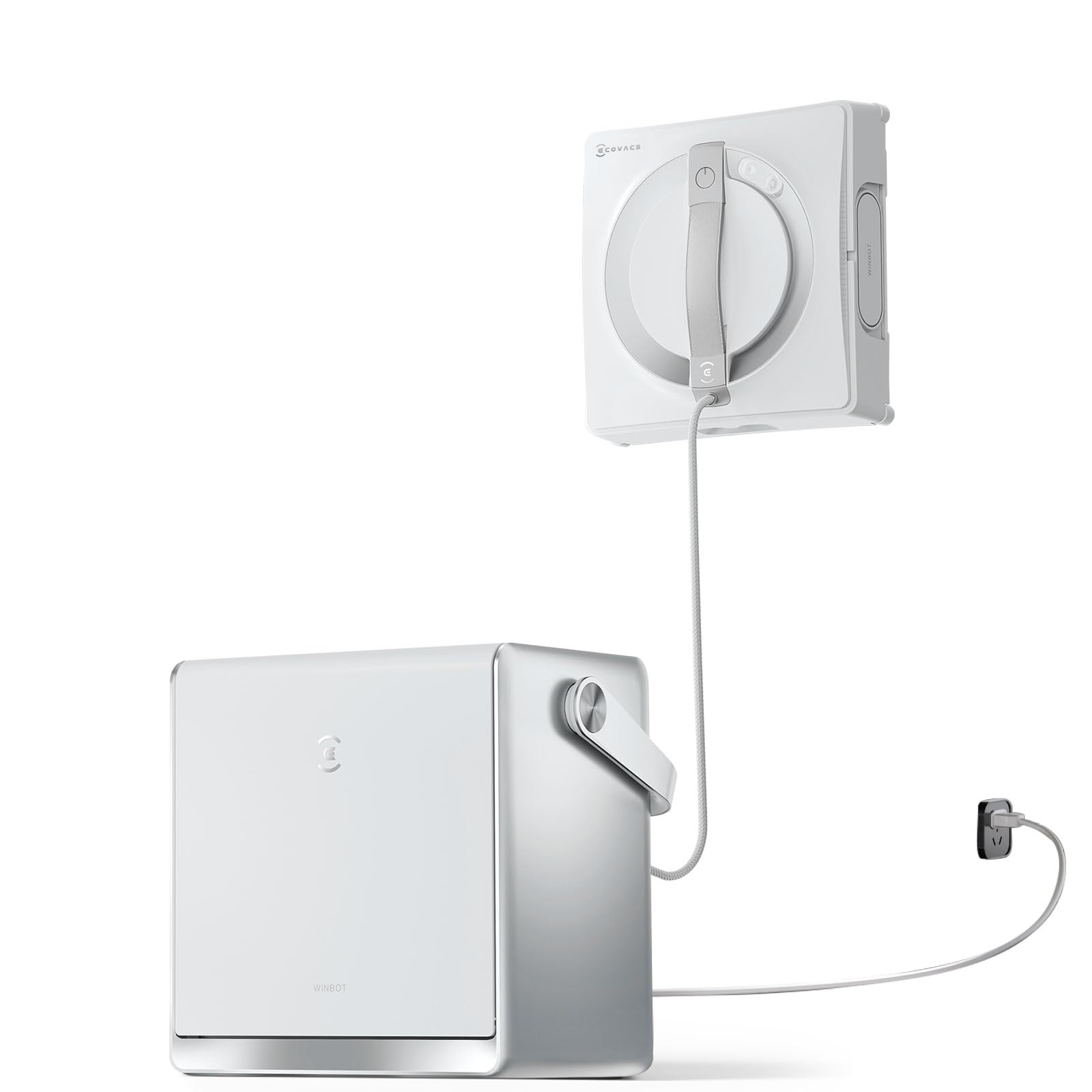
- The WINBOT W2 PRO Omni offers battery and plugged-in power modes, a multifunction station, triple-nozzle spray, WIN-SLAM 4.0 path planning and five cleaning modes.
- The WINBOT W3 Omni pairs WIN-SLAM 5.0 navigation and three cleaning modes with an automatic station that washes its pads after use.
Is WINBOT W3 Omni Worth It?
The ECOVACS WINBOT W3 Omni is worth considering for households that clean substantial glass areas regularly and want the robot to handle pad washing after each use.
Its station, cleaning modes, edge-focused scrubber and triple-nozzle spray form a coherent package for routine window maintenance.
Buy it if the station and robot routines suit your windows and you are comfortable rinsing the pad or repeating a cycle when dirt is heavier.
If your needs are limited to occasional, easy-to-reach spot cleaning, a simpler approach may be more practical.
Your review at a glance
500+ ratings
Read Amazon ReviewsECOVACS WINBOT W3 Omni
A fit for homes with large glass areas and routine window-cleaning needs, especially buyers who want the robot to wash its pads after a run.
- Automatic station washing: the multifunctional station washes the robot’s wiping pads after use, using 16 high-pressure nozzles in a cycle described as taking about one minute.
- WIN-SLAM 5.0 navigation: the robot is described with dynamic obstacle avoidance and Fast, Intensive and Zone cleaning modes.
- TruEdge scrubber: the scrubber lowers along edges, cleans toward corners at 200 RPM and retracts automatically during operation.
- Triple-nozzle spray: three wide-angle nozzles apply water to help loosen dirt while the wet pad wipes the glass.